Stuart RV Repair diagnoses and fixes RV battery and 12-volt system problems on-site across Stuart, FL and the Treasure Coast. Dead batteries, parasitic draws, converter charging, isolators, and battery bank wiring for AGM and lithium setups.
Stuart RV Repair fixes RV battery and 12V system problems on-site. Dead batteries, parasitic draws, converter charging failures, isolator issues, and full battery bank wiring for AGM and lithium. $80-500 depending on the job. We come to you anywhere in Stuart, FL and across Martin County. Call 772-280-3915. Need other RV electrical repairs? We handle those too.
Every RV runs on two electrical systems: 120-volt AC (from shore power or a generator) and 12-volt DC (from batteries). That 12V side powers your lights, water pump, slide-out controls, furnace fan, LP detector, and the brains of just about every appliance in the coach. When your batteries die or the 12V system has a fault, nothing works right. Not even the stuff that's plugged into shore power, because the control boards need 12V to operate.
In Florida, battery problems are worse than anywhere else. The heat in Stuart and across Martin County bakes batteries even when your RV is parked. We're talking 130+ degrees inside an unventilated battery compartment during summer. Flooded lead-acid batteries lose water fast, AGM batteries develop internal resistance, and even lithium cells degrade quicker above 95 degrees. We test and replace RV batteries every single week down here, and parasitic draw testing is probably our second-most common electrical call after shore power issues.
Beyond the batteries themselves, the charging system causes plenty of headaches. Your converter should charge the batteries whenever you're on shore power, but a failed converter or a blown inline fuse means the batteries just sit there and slowly discharge. The battery isolator is supposed to let the engine alternator charge your house batteries while driving, but a dead solenoid or blown diode means the house bank only charges when you're plugged in. We trace the entire circuit from source to battery terminal to find exactly where the problem is.
Classic parasitic draw. Something is pulling power while everything should be off. We hook up a clamp meter on the main battery cable and pull fuses one at a time until we find the circuit that's draining. Common culprits: a stuck LP gas detector (those pull 0.5 amps continuously), an aftermarket stereo with a constant memory feed, or a faulty CO alarm. Usually $80-180 to find and fix.
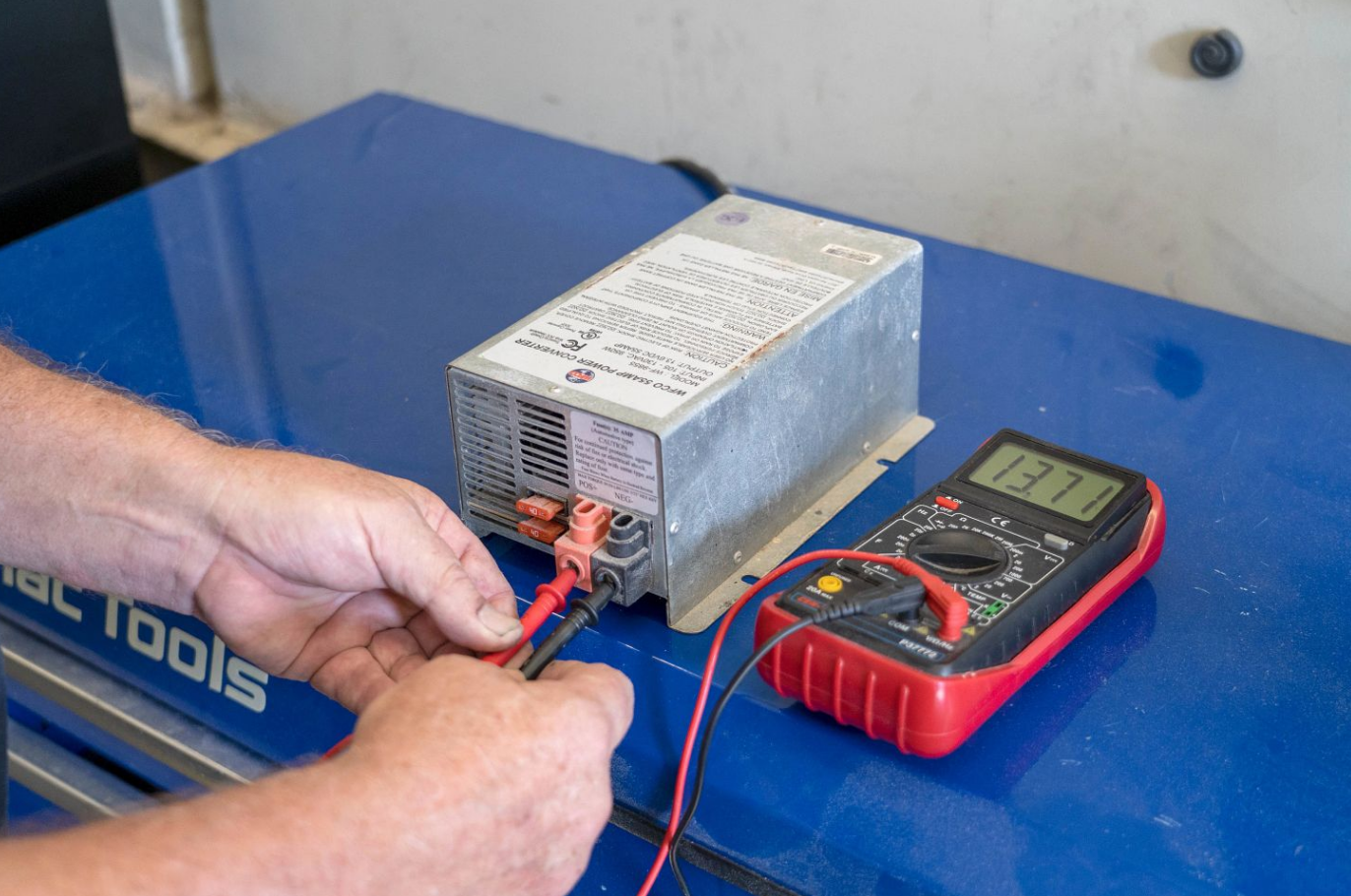
The converter should be sending 13.6-14.4 volts to the battery bank whenever you're on shore power. If voltage at the battery terminals matches battery resting voltage (12.4-12.6V) while plugged in, the converter output isn't reaching the batteries. Could be a blown fuse on the DC output, a failed converter board, or corroded cables with too much resistance. We test the full path from converter to battery terminal.
The battery isolator or charging solenoid between chassis and house batteries has failed. When it's working, your engine alternator charges both banks while you drive. When it fails, the house batteries only charge from shore power or solar. We replace both solenoid-type and diode-type isolators on-site. The fix runs $120-220 depending on the type.
Low battery voltage. Your bank is either undercharged, sulfated from sitting too long, or one battery in the bank has a dead cell. We load-test each battery individually. A battery can show 12.4V at rest but collapse under load if it's got internal damage. Florida heat kills batteries fast. If one battery in a parallel bank goes bad, it drags the others down with it.
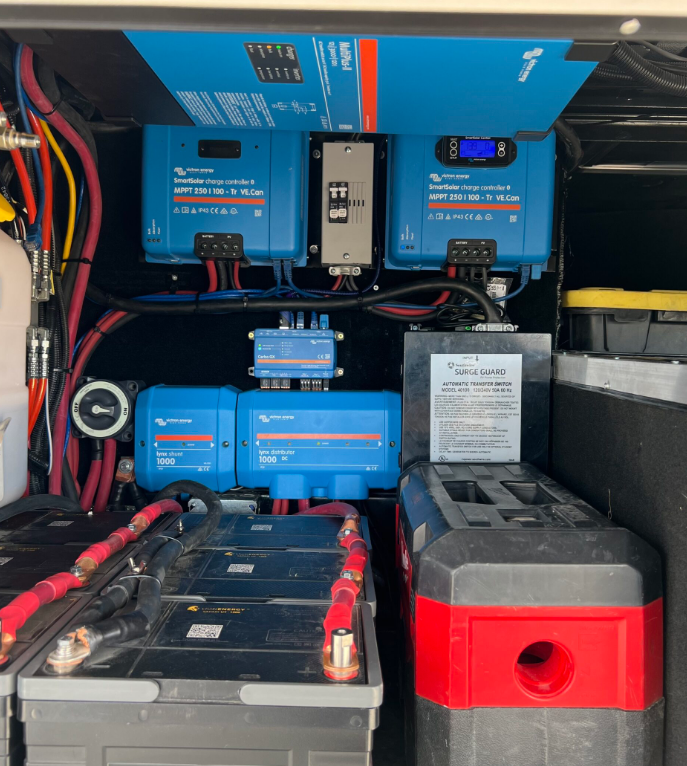
Lithium is worth it for a lot of RV owners, but it's not just a battery swap. Your converter needs to support a lithium charge profile (or you need a new one). The BMS (Battery Management System) needs proper wiring. And if you're running solar, the charge controller settings change too. We handle the full upgrade, not just dropping a new battery in the box. According to Battle Born Batteries, lithium cells perform best with matched charging profiles.
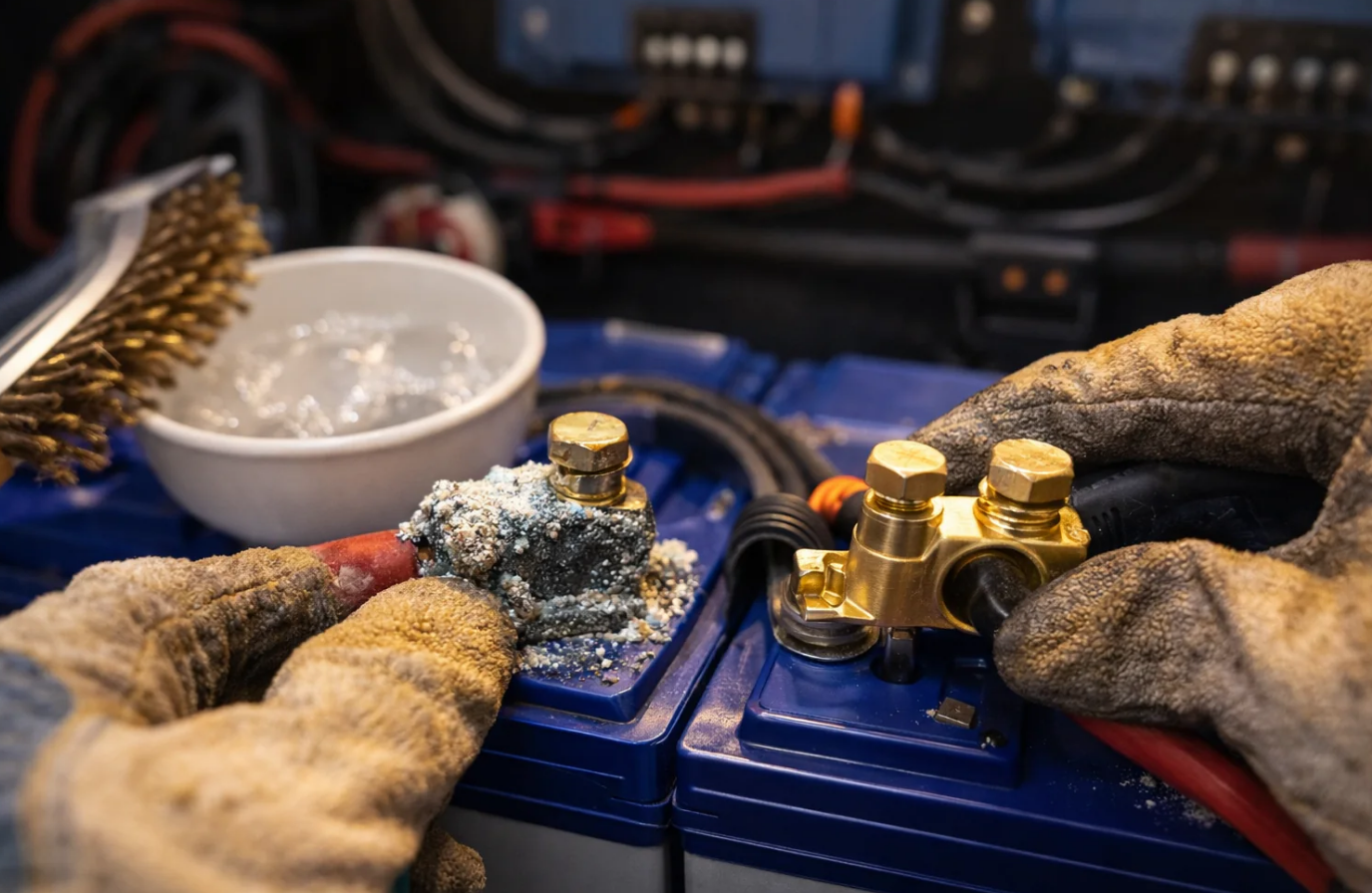
Florida humidity and salt air eat through battery terminals faster than you'd expect. Corroded connections create resistance, which means less charging current reaching the battery and less power getting to your RV systems. We clean, replace, or upgrade terminals and cables with proper marine-grade lugs. If the corrosion is bad enough, we replace the full cable run. Usually $60-120.
RV battery banks come in all shapes and sizes. Here's what we see most in Stuart and across the Treasure Coast, and what you should know about each type.
The most common OEM batteries in new RVs. Interstate and Deka (East Penn) make the Group 24 and Group 27 batteries you'll find in 80% of travel trailers and fifth wheels. They're affordable ($100-150 each) but last only 2-4 years in Florida heat. If you're replacing one battery in a pair, we recommend replacing both at the same time so they age together.
Two 6-volt golf cart batteries wired in series give you a 12V bank with about 50% more usable capacity than two Group 24s. Trojan T-105 and Crown CR-220 are the go-to models. They handle deep discharges better than standard 12V batteries. We install these regularly for RV owners who dry camp or boondock. The pair runs $250-350 installed.
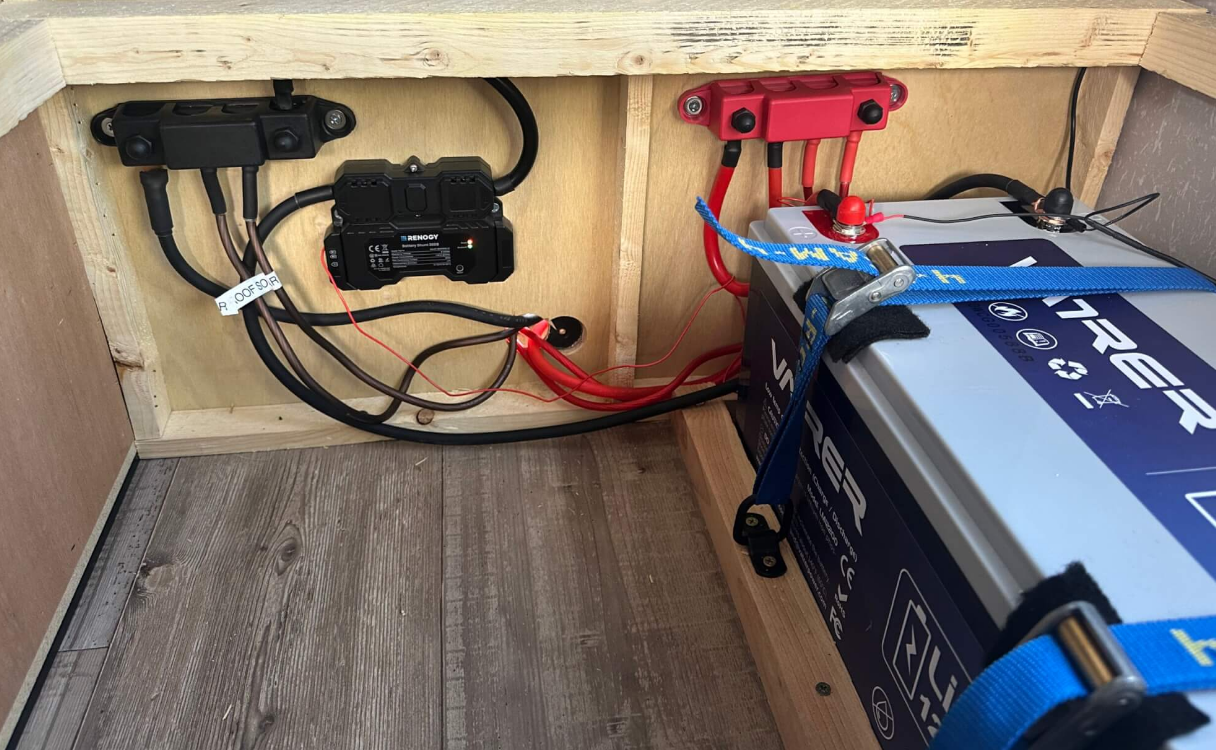
Lithium iron phosphate (LiFePO4) batteries are the premium option. Battle Born 100Ah is the most popular drop-in replacement we install. Renogy and SOK are solid budget alternatives. Lithium gives you deeper discharge (80-100% usable vs. 50% for lead-acid), weighs half as much, and lasts 3,000-5,000 cycles. We handle the full install including converter reprogramming for lithium charge profiles.
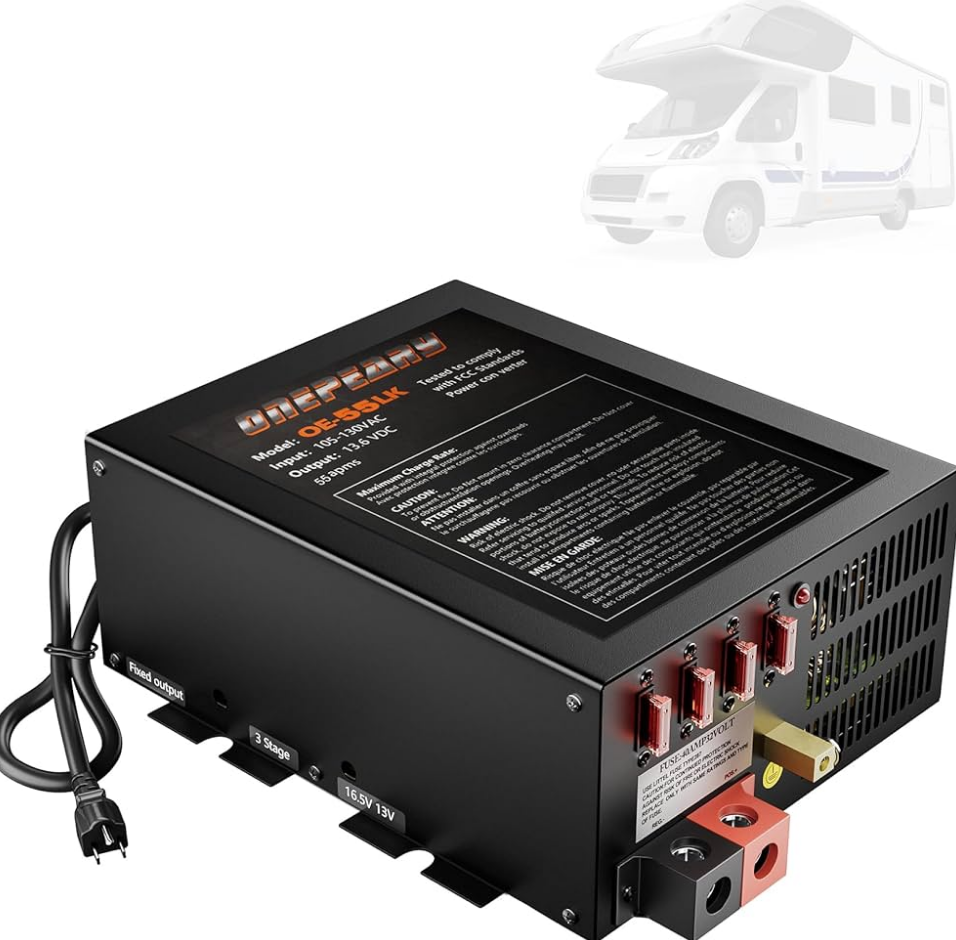
Your converter charges the batteries from shore power. WFCO 8700 series and Progressive Dynamics PD9200 series are the two most common in RVs today. When a converter fails, the batteries stop charging. We test output voltage and ripple, and replace boards or full units on-site. If you're upgrading to lithium, we can also swap your converter to a lithium-compatible model at the same time.
Call 772-280-3915 or request an estimate online. Tell us what's going on, whether it's dead batteries, dim lights, things not powering on, or a battery that won't hold charge. If you know your battery type (lead-acid, AGM, lithium), that helps. We'll schedule same or next day in the Stuart area.
Our tech tests battery voltage at rest and under load, checks for parasitic draws with a clamp meter, verifies converter output, tests isolator operation, and inspects all cable connections and fuses. You get a written estimate before we start work. The full diagnostic takes about 30-45 minutes.
We carry batteries, cable terminals, fuses, disconnect switches, and isolator components on the truck. Most 12V repairs finish in 1-2 hours. Battery bank rewiring and lithium upgrades run 2-3 hours. You're back to full power the same day.
| Repair Type | Price Range | Typical Time |
|---|---|---|
| Parasitic draw test & fix | $80-180 | 1 hr |
| Battery cable / terminal replacement | $60-120 | 45 min |
| Single battery replacement (installed) | $150-280 | 30-45 min |
| Battery isolator / solenoid replacement | $120-220 | 1-1.5 hrs |
| Battery disconnect switch install | $80-160 | 1 hr |
| Battery bank rewire (2-4 batteries) | $200-400 | 2-3 hrs |
| Lithium upgrade (labor only) | $250-500 | 2-3 hrs |


Batteries kept dying overnight in our fifth wheel parked at a storage lot off Kanner Highway. Tech came out, found a faulty LP detector pulling half an amp around the clock. Swapped it out and installed a battery disconnect switch so we can kill the draw when we're not using the rig. Problem solved. Super knowledgeable guy.
Wanted to upgrade our Class C to lithium for dry camping. The tech handled everything, from pulling the old batteries to wiring in two Battle Born 100Ah units and reprogramming our converter. Took about 3 hours and it was done right. We've been boondocking every weekend since with no issues.
House batteries weren't charging while driving our motorhome. Turned out the isolator solenoid was stuck open. Tech tested it right there in the parking lot at a Palm City campground, replaced the solenoid, and had both banks charging from the alternator again within an hour. Good price and no upsell.
RV battery repairs in Stuart typically run $80-500 depending on what's needed. A parasitic draw test and fix is $80-180. Battery cable replacement runs $60-120. A single battery replacement with install is $150-280. A full battery bank rewire with new AGM or lithium batteries runs $350-500 for labor plus the cost of batteries. We give you a written estimate before starting.
A parasitic draw is draining them. Something pulls power when it shouldn't. Common culprits are a stuck LP detector, a radio memory circuit, a faulty CO alarm, or a converter fan that won't shut off. We use a clamp meter to find exactly which circuit is draining the batteries and fix it. The test takes about 30 minutes.
Lithium lasts 3-5 times longer, weighs half as much, and discharges deeper without damage. But they cost 3-4 times more upfront, and your converter needs to support lithium charging profiles. If you're a full-timer or dry camp often, lithium pays for itself. Weekend warriors might not see the return. We install both AGM and lithium and can walk you through the numbers for your setup.
With the RV plugged into shore power, battery voltage should read 13.6-14.4V at the terminals. If it's sitting at 12.6V or lower while on shore power, the converter isn't sending a charge. Could be a bad converter, a blown fuse on the DC side, or corroded cables creating resistance. We test converter output under load to pinpoint the issue.
A battery isolator separates your chassis battery from your house batteries so running lights and the fridge doesn't drain the engine start battery. When the isolator fails, either both banks drain together or the house batteries stop charging from the alternator while driving. We test and replace solenoid-type and diode-type isolators on-site.
Standard lead-acid batteries last 2-4 years in Florida heat. AGM batteries run 4-6 years. Lithium can go 8-10 years with proper management. The heat accelerates electrolyte evaporation in flooded batteries and increases self-discharge rates across all types. We see plenty of batteries that tested fine up north but died within a year of sitting through Martin County summers.
We handle all RV electrical repairs, from shore power and converters to slide-out motors, appliance wiring, and full panel upgrades. Multiple electrical issues? We knock them all out in one visit across Stuart and Martin County.
We cover Martin County and surrounding areas for all RV battery and 12V system repairs. Stuart, Palm City, Jensen Beach, Hobe Sound, and beyond.
Call us or request a free estimate. We'll get a tech out to your site with the right tools and parts, same or next day. Battery testing, replacements, parasitic draw fixes, and full bank upgrades. All done at your campsite or driveway.